
The patented geometry and flow patterns of TORBED processors enable intense processing, with high heat transfer and rapid rates of reaction. This process intensification leads to higher energy, space, and cost efficiency as well as product improvement. The TORWAVE combining conventional and microwave energy sources, builds on this.
Torftech’s heritage is rich in examples of our solving specific process problems to address challenging needs. This continues to be our outlook. We work with our clients to design and deliver novel and revolutionary systems that meet their exact requirements. Our TORBED and TORWAVE technology enable all sorts of unique processes and generate exciting new products.
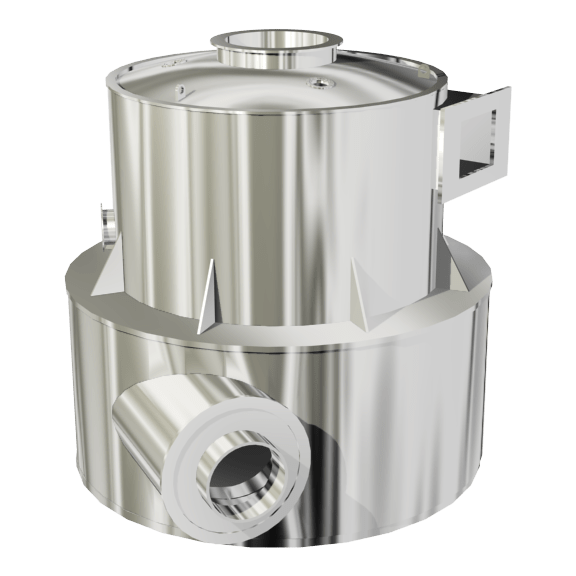
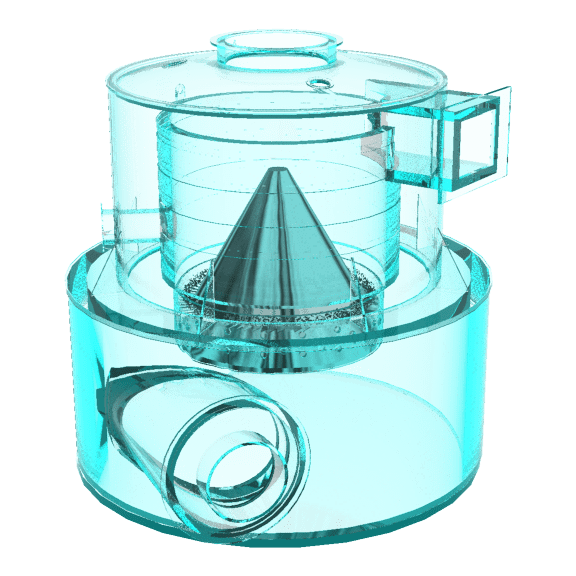
TORWAVE is a new technology that changes the process industry landscape, delivering microwave energy with precision. Built on hundreds of sales of proven industrial equipment, TORWAVE processors combine Torftech’s expertise in the TORBED processor and the microwave engineering skills of the University of Nottingham.
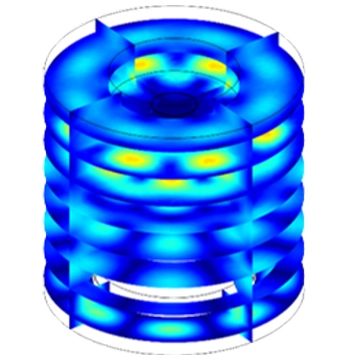
High heat transfer rates achieved in the TORBED and TORWAVE processors allow more rapid expansion of water or other volatiles in a feed particle causing it to expand more rapidly, opening up the structure of the particle. Good examples would be the processing of pasta shapes to produce puffed snacks, roasting of coffee and ‘exfoliation’ (expansion) of minerals such as vermiculite. The TORWAVE processor by providing both conventional heat and microwave energy can significantly enhance this process by increasing the internal vapour pressures developed.
Used in the processing of minerals, Calcination is thermal treatment (heating) of a solid whereby it is raised to high temperature without melting, generally for the purpose of removing impurities or volatile substances and/or to incur thermal decomposition. Used in the processing of minerals, calcination is a chemical process in which a substance is heated to a high temperature in the absence of oxygen, in a neutral atmosphere or with limited oxygen supply.
This process is often used to decompose carbonate ores, such as limestone, into their respective oxides, releasing carbon dioxide in the process. In metallurgy, calcination is used to drive off volatile components from ores before further processing. In the pharmaceutical industry, it is utilized to remove impurities from drugs or to convert them into more stable forms.
Our processors offer their customary control, economy and efficiency.
Carbon sequestration is the process of capturing carbon dioxide (CO2) from the atmosphere.
This can occur naturally: trees and plants absorb CO₂ during photosynthesis and store it as carbon in biomass (trunks, branches, leaves, and roots) and in soil. Engineered means of carbon sequestration include Carbon Capture and Storage, the initial stages of which typically include introduction of a gas stream to a reagent which adsorbs the CO2. A small, 3-d printed Torbed reactor is currently being used to test various reagents. The underlying technology is gas scrubbing, which Torftech first implemented using a TORBED processor in 1996.
The thorough mixing provided by a TORBED processor helps maximise the uptake of CO2.
A process used in destruction of some wastes and biomass, delivering maximum energy extraction/completion and carbon burnout. Our processors offer control, intensification and thoroughness of processing, avoiding hotspots.
Drying is a feature of the Torftech Technology across a range of industrial applications from processing starch powders in the food industry to drying biomass and sludges. Drying applications showcase the control that the TORBED offers, removing water without damaging underlying materials. For particularly sensitive applications, an initial pulse of microwave energy can be applied using the TORWAVE processor.
Flash calcination is a process used in various industries, primarily in materials processing and manufacturing, to heat materials quickly to high temperatures for a short duration. This rapid heating process is typically accomplished within a few seconds or milliseconds. Flash calcination is often used for materials that require precise control over their properties, such as catalysts, ceramics, and certain types of minerals. It offers several advantages over conventional calcination methods, including shorter processing times, improved energy efficiency, and the ability to achieve specific material characteristics. TORBED processors have been used for commercial flash calcination processes since 2000.
Flash roasting is a specialized thermal processing technique used in the extraction of metals from ores, particularly in the field of hydrometallurgy. It involves the rapid heating of finely ground ore particles to high temperatures in a controlled environment. The purpose of flash roasting is to transform the ore into a form that is more amenable to subsequent processing
TORBED processors are a more effective process in which to introduce reagents to gas streams to remove undesired constituents. We sold our first processor for gas scrubbing in 1996. Gas scrubbing is the core of any process of carbon capture. These large plants scrub the gas in one pass as opposed to multiple passes as used in other processes.
Gasification, as opposed to Pyrolysis (see below), occurs when biomass or organic waste is heated in an atmosphere with a limited oxygen content at over 650°C. Carbon monoxide, methane and hydrogen are generated to produce a combustible gas stream (‘syngas’). Syngas with a greater energy content can be produced either by introducing oxygen into the process or undertaking the process under greater than atmospheric pressure. The TORBED processors are particularly effective at the small/medium scale unpressurised gasification processes.
As with cooling above, the high heat transfer rates achieved in TORBED and TORWAVE processors allow smaller but more effective pre-heaters for minerals for example.
Where the contaminants to be removed or sufficiently reduced are held on the surface of a feedstock (spices for example), the TORBED processors are particularly effective for flash or high speed processing compared to large slow autoclave processes. Multiple large scale pasteurisation processes using TORBED processors have been in operation over many years.
Pyrolysis is the process of driving off volatiles from a material (typically biomass or forms of waste) at up to 650°C – in the case of biomass to produce biochar and a volatile stream that can be condensed or combusted. The process aims to maximise biochar by minimising conversion of the fixed carbon in the material into the volatile stream (as with gasification above). It will require direct or indirect external heating.
As with drying, this is an application that crosses a number of industrial boundaries from food to biomass processing and minerals. The roasting of coffee or cocoa are good examples of processes used in the food and beverage industries. The TORBED and TORWAVE processors are particularly effective at controlling roast processes due to the very close control inherent in their concepts. Close roast control allows better flavour development and increased extraction of the coffee oils generated for example.
Roasting is also used in the minerals industry for converting sulphides to oxides for example (such as zinc sulphide to zinc oxide). Again the TORBED processors produce higher surface area, more reactive and purer product.
A roasting process reducing moisture and breaking down cellular structures, whilst preserving most volatiles. This increases energy density and brittleness, the latter permitting milling for easy pelletisation.
then the TORBED Technology offers an efficient and often more effective alternative to conventional technologies, including rotary kilns, fluidised beds and circulating fluidised beds, drum dryers, belt dryers and rotary hearths.
Find out more about some of the processes for which our processors have been used.
188 First Street
Greenham Business Park
Thatcham, Berkshire
RG19 6HW
UK
TORBED® is a registered Trademark of Mortimer Technology Holdings Ltd | © 2024 Torftech Group